Enfoque de atención al cliente multicanal: definición, límites y mejores prácticas
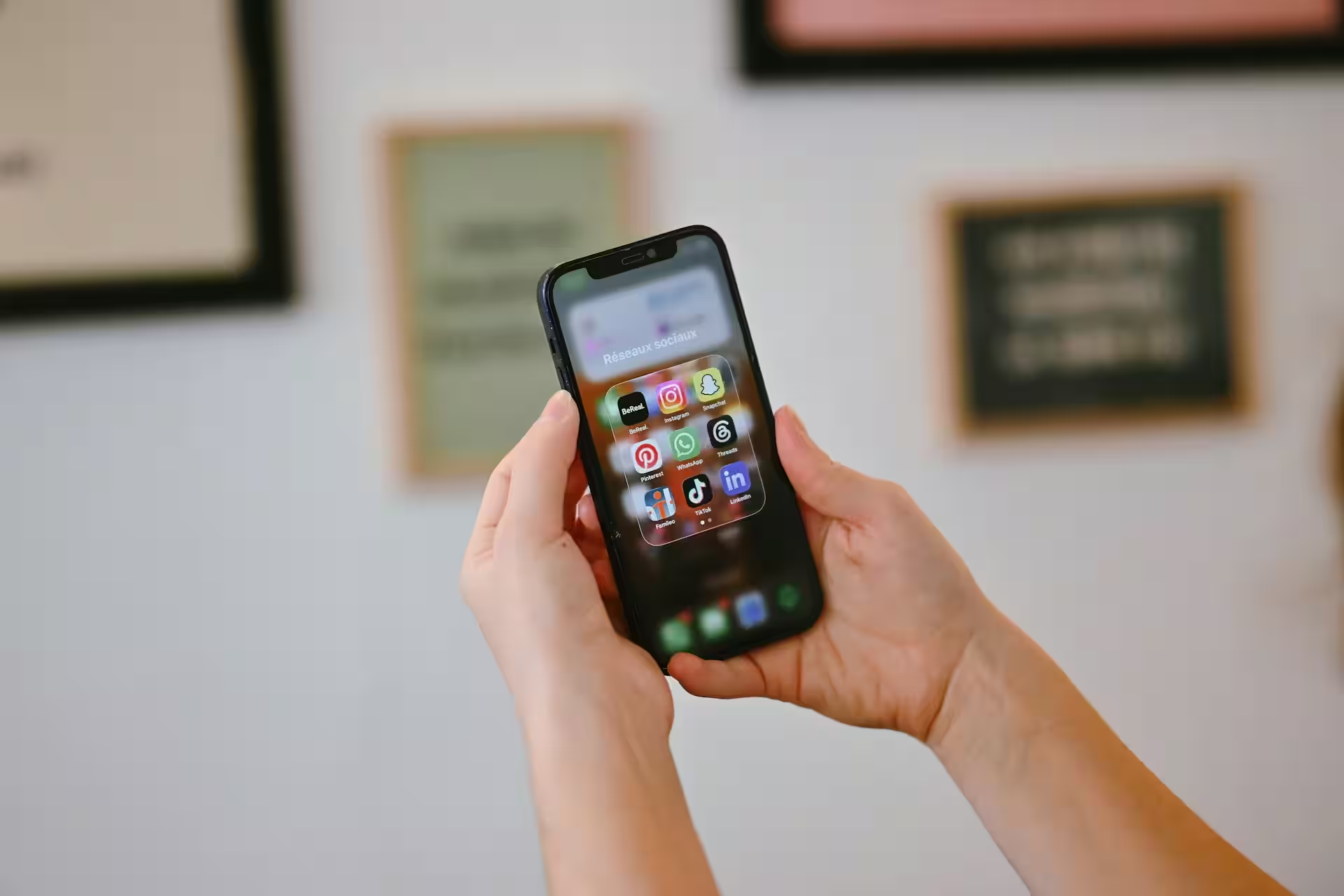
Un enfoque de atención al cliente multicanal significa multiplicar los puntos de contacto con el cliente (teléfono, correo electrónico, chat, redes sociales) para que los clientes puedan elegir su canal preferido. Es un primer paso útil, pero tiene un límite estructural muy subestimado: cuando estos canales no están coordinados, los clientes tienen que repetirse cada vez que cambian de canal, lo que daña directamente su satisfacción.
What is a multichannel customer service approach?
A multichannel customer service approach means using several contact channels (phone, email, online chat, and social media) to interact with customers, with each channel operating independently.
The real difference between multichannel, cross-channel, and omnichannel
These three concepts are often confused, even though one criterion is enough to separate them clearly: do the channels communicate with each other, and does customer context move from one channel to another?
In a multichannel approach, each channel works in a silo. A customer can contact support by email or chat, but the history from one channel is not visible in the other.
In a cross-channel approach, channels start to coordinate: information circulates partially, with a degree of message consistency from one channel to another.
In an omnichannel approach, channels are fully unified: a customer can start a conversation on one channel and continue it on another without ever having to repeat themselves because the full history follows the conversation.
Why this confusion is costly for companies that stop at multichannel
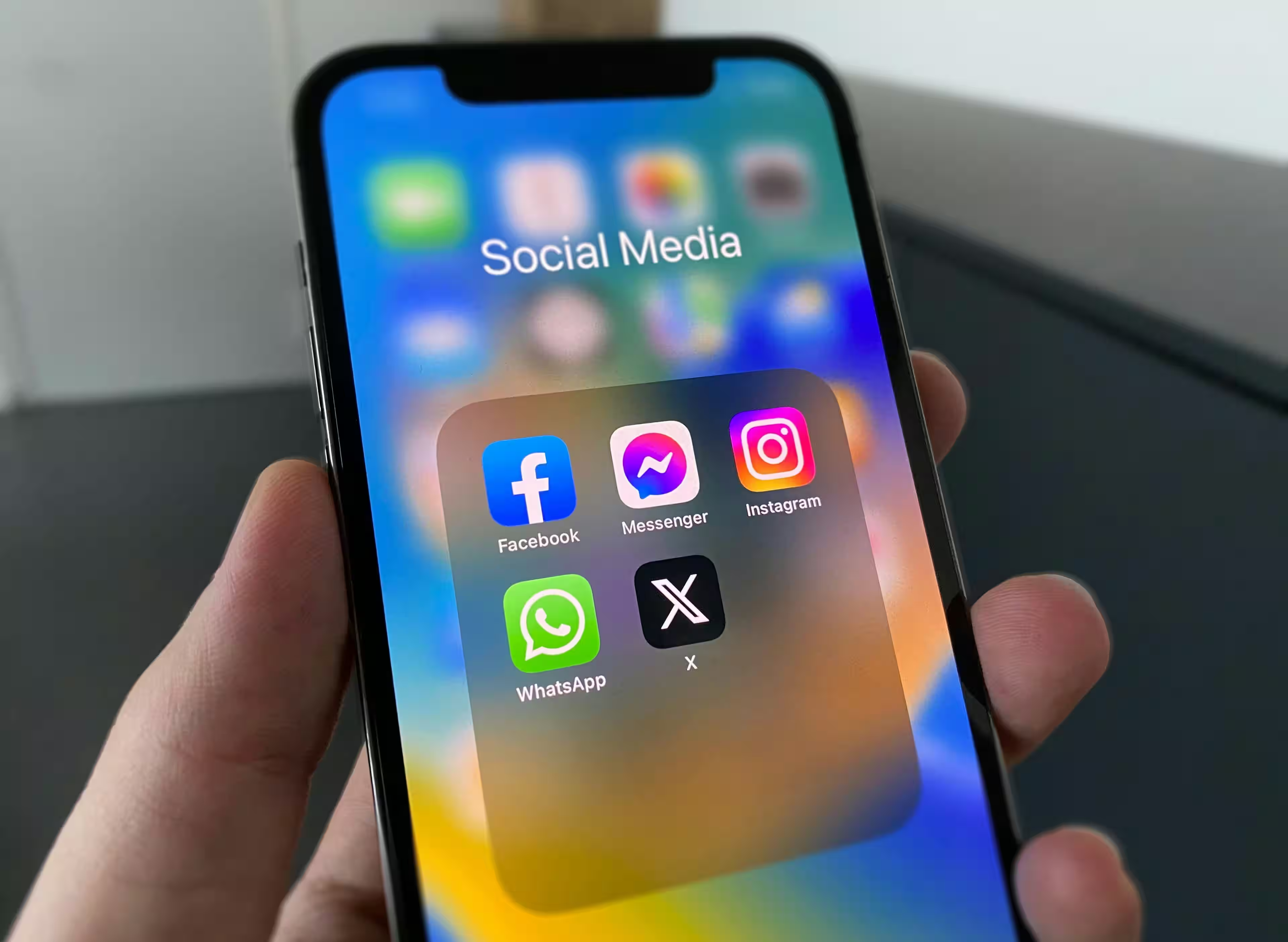
Most companies that claim to have an omnichannel strategy actually have a well-executed multichannel strategy: several channels, a consistent brand identity, but no real information flow between them. This confusion is not just a matter of terminology; it has a direct cost for customer satisfaction.
The benefits and limits of a multichannel approach
What multichannel really brings
Multiplying channels allows customers to choose the most suitable contact method for their situation: phone for an emergency, email for a nonurgent request, and chat for a quick answer. This diversity also extends the company’s reach, because it addresses customer segments with different preferences, and it reduces pressure on a single channel by distributing requests.
The structural limit: channels that do not communicate with each other
The downside of this diversity is fragmentation. A customer who contacts support by chat and then follows up by email usually has to explain the situation again from the beginning, because the agent handling the email does not have access to the previous conversation. This context break is exactly the kind of friction that damages satisfaction most, as detailed in our article on conversational support and customer satisfaction.
Multichannel and customer satisfaction: what the data shows
The gap between a siloed multichannel setup and a system where context actually circulates between channels is not marginal. Support that preserves context from one channel to another reaches an average CSAT of 67%, compared with only 28% for a multichannel setup where each channel remains independent. The main reason for this gap is simple: having to repeat information when switching channels is one of the most frequently cited customer frustrations, and this is exactly what siloed multichannel support can never solve by design.
This data confirms a core point: the number of available channels is not what determines satisfaction; the continuity of information between them is.
How to evolve from multichannel to a coherent approach
Centralize customer data in a unified history
The priority is to ensure that every interaction, whatever the channel, feeds a single customer history accessible to every agent. A CRM shared across channels allows an agent receiving an email to immediately see that the customer already had a chat conversation the day before, without making the customer explain it again.
Choose the right channels by request type, not every channel for every request
Offering one suitable channel for each type of request is better than multiplying channels without distinction. An urgent or emotionally sensitive request is better handled by phone or another synchronous channel; a simple, non-urgent request can be handled very effectively by email or a self-service form.
This logic directly aligns with the decision framework detailed in our article on customer service automation: the channel, like the level of automation, must be chosen according to the nature of the request, not applied uniformly.
Mistakes to avoid in a multichannel strategy
- Adding channels without connecting them, which multiplies friction points rather than useful contact points.
- Training teams channel by channel, without a cross-functional view of the complete customer journey.
- Measuring satisfaction channel by channel without ever assessing journey consistency as a whole.
- Confusing presence on a channel with quality of handling on that channel, which pushes companies to open poorly controlled new channels instead of consolidating existing ones.
Multichannel customer service approach: where to start
The right question is not how many channels to offer, but whether a customer can move from one to another without ever losing the thread of their request. The same logic runs through our two previous articles: whether the topic is automation or conversational support, satisfaction depends on continuity, not on the number of available options.
En Alcmeon, esta continuidad está integrada en la plataforma desde el principio: cada canal alimenta un historial único del cliente, de modo que cada agente, ya sea humano o asistido por IA, siempre dispone del contexto completo, independientemente del canal por el que haya comenzado la conversación.