How to centralize customer messages without missing anything
A customer messages you on WhatsApp in the morning, another reaches out on Instagram at noon, and a third sends an email at the end of the day.

A customer messages you on WhatsApp in the morning, another reaches out on Instagram at noon, and a third sends an email at the end of the day. Multiply these situations across a team of three or four people, and missed messages become inevitable.
According to Arcep, 86% of people in France aged 12 and over use instant messaging. Your customers are already on these apps, and they expect a fast response. Centralizing customer messages in one tool helps you regain control.
Why centralize your customer messages?
Requests scattered across every channel
Contact forms, chat, WhatsApp, Instagram, Messenger, SMS, and email, not to mention messages received through your Google Business Profile or PagesJaunes.
Each channel has its own app, notifications, and sometimes its own login credentials. Your team then spends its days switching from one tab to another, with the risk of missing an important request.
The risks of fragmented communication
When messages come in from everywhere, the same problems keep coming back:
- messages that are read and then forgotten because no one knows who should respond;
- two team members replying to the same customer, sometimes with conflicting answers;
- shared passwords used to access company accounts;
- fragmented history that forces customers to repeat what they have already explained.
What centralization changes day to day?
Bringing your conversations together saves time and improves responsiveness. A customer who gets a quick response on the channel they chose is more likely to return. It is also a matter of brand image. A company that responds quickly and consistently appears more professional and better organized.
How does a tool for centralizing customer messages work?
One inbox for all your channels
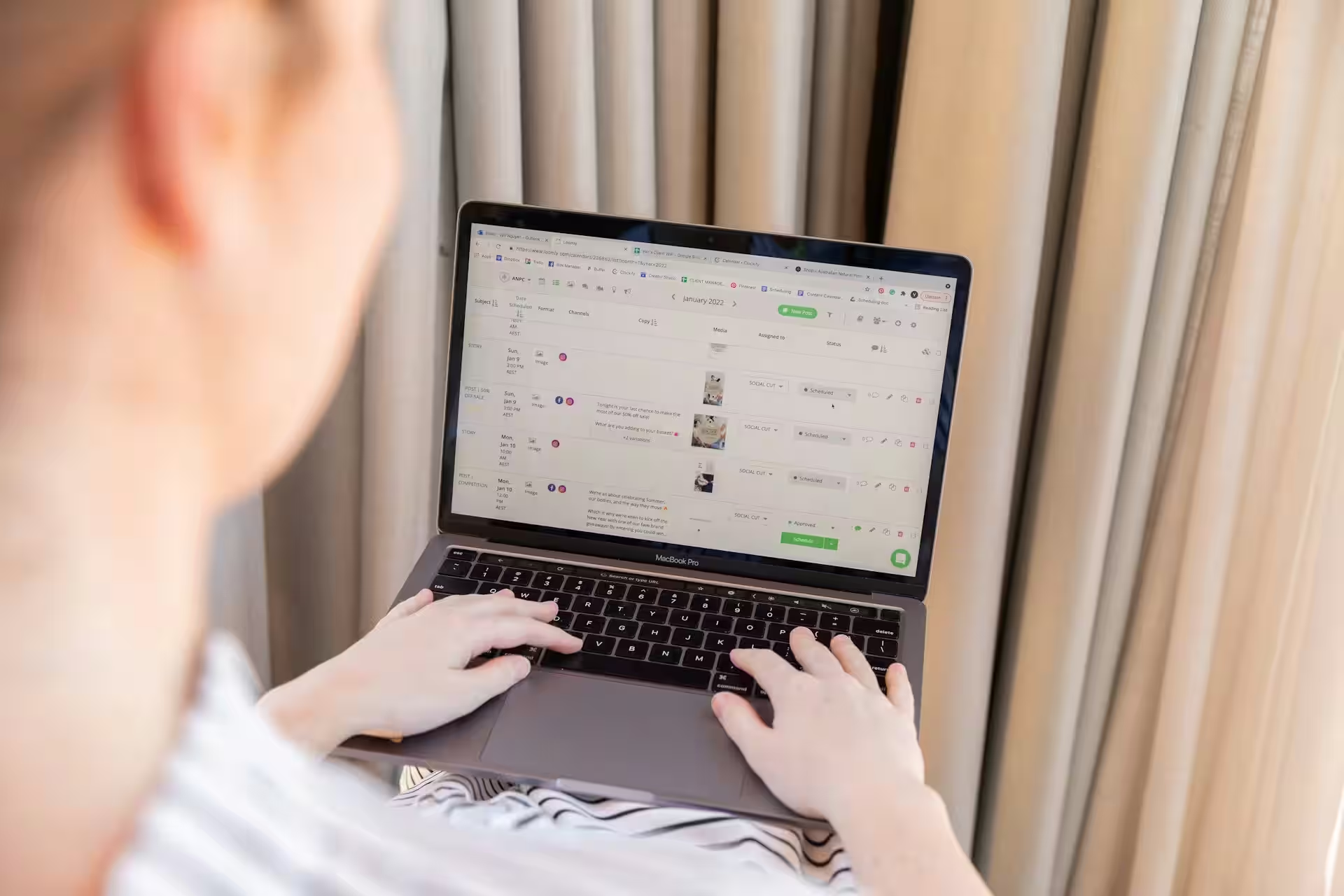
The principle is simple. You connect your different channels to a unified inbox, and all messages arrive in the same place. Nothing changes for the customer. They keep writing from WhatsApp, Instagram, or their usual messaging app and receive your reply in the same place.
The features that make a difference
Beyond simply bringing messages together, a good tool helps your team collaborate and save time. Look for these features:
- conversation assignment, so every request has an owner;
- internal notes, so colleagues can communicate without the customer seeing;
- collision detection, which prevents two people from replying at the same time;
- response templates and automated replies for frequently asked questions;
- routing rules, which direct each message to the right person;
- customer history, ideally connected to your CRM software.
Chatbots and AI: support rather than a replacement
Most solutions now include a chatbot or conversational agent. It answers simple questions at any time, books appointments, or directs the customer to the right person. Humans remain in control of complex requests. To learn more, read our article on AI for customer relations.
Which solution should you choose to centralize customer messages?
Not all centralization tools address the same need. Before comparing features, you first need to know which type of solution fits your organization.
The main types of tools
All-in-one messaging apps bring your apps together in a single interface. They suit a solo professional who wants to read everything in one place, but they are not designed for teamwork or integration with customer management tools.
Shared inboxes allow several team members to handle shared addresses. They often remain email-focused and show their limits once WhatsApp or social media become important.
Omnichannel conversational platforms go further. They bring together all messaging channels, automate some responses with AI and connect to your CRM. This is the most suitable solution for companies that receive a high volume of requests across multiple channels.
Finally, if your main need is managing tickets and contractual response times, traditional customer service software can complement your setup.
How to choose the right tool to centralize customer messages?
Before you commit, check four points:
- Your dominant channel. If email accounts for most of your requests, a tool integrated with your email system may be enough. If WhatsApp and social media dominate, prioritize an omnichannel solution.
- Access security. Each team member should have their own access, with no shared password. Bringing all your accounts together creates a single entry point, so it must be well protected. Also check the provider’s GDPR compliance.
- Data export. Make sure you can retrieve your conversations if you change tools.
- Budget. The differences between free versions, freemium plans, and per-user subscriptions can be significant. Compare options based on your actual volumes.
Centralize your customer messages in 4 Steps
- Take inventory of your channels. List every place where customers message you and estimate the volume for each.
- Start with the channel causing the most problems. Connect the one that generates the most missed requests first, then add the others gradually.
- Set team rules. Define who handles what, which statuses to use, and how quickly to respond.
- Measure and adjust. Track response times and customer satisfaction to improve your organization over time.

Alcmeon, the conversational platform for your teams
Alcmeon brings all your customer conversations together in a single advisor console. More than 15 messaging channels can be connected, including WhatsApp, Instagram, Messenger, TikTok, RCS, and your website chat.
The platform combines the best of automation and human support:
- chatbots that handle simple requests 24/7 and hand over to an advisor when the situation requires it;
- a copilot agent that helps your advisors respond faster with AI;
- native integration with your CRM, including Salesforce and Zendesk, to provide a complete customer view;
- real-time statistics to manage service quality.
Brands such as SNCF Connect, Carrefour, Fnac Darty, and La Poste already rely on Alcmeon to manage customer conversations at scale.
Want to see how it works with your own channels? Book a demo with our teams.